
Beyond Babel: Building Unity and Overcoming the “Appreciation Gap” in Our Relationships
Have you ever felt like you and your partner were operating on completely different wavelengths? You wash their car, clean the kitchen, and manage the chores, yet they still feel unloved. Meanwhile, they offer a hug or a word of encouragement, but you just feel overwhelmed by the messy house.
You both care deeply, but somehow, the message gets entirely lost in translation.
In our latest session of the Church Marriage Class, we dove into the mechanics of Love Language Awareness. We discovered that relationship struggles are rarely caused by a lack of effort. More often, they are caused by a lack of a shared language. Whether you are single, dating, or have been married for decades, learning to dismantle these communication barriers is the key to building a relationship that truly thrives.
The “Babel Effect” in Modern Relationships
To illustrate how communication impacts our daily lives, Pastor took us back to the Old Testament, drawing a powerful parallel from the days of Nimrod and the construction of the Tower of Babel. Scripture notes that the beginning of Nimrod’s kingdom was Babel (Genesis 10:10), a place that quickly became a monument to human ambition and unified effort.
When humanity spoke a single, unified language, their ability to cooperate and achieve common goals was unmatched. Pastor pointed out a profound truth: God didn’t stop the construction of the tower by physically knocking it down. Instead, He simply confused their language.
As the Scripture records:
“And the LORD said, Behold, the people is one, and they have all one language; and this they begin to do: and now nothing will be restrained from them, which they have imagined to do.” — Genesis 11:6 (KJV)
The moment they stopped understanding one another, their teamwork collapsed, their productivity plummeted, and their progress instantly stalled.
The parallel in our relationships today is striking. When spouses speak entirely different love languages—such as one relying on physical touch while the other craves acts of service—it creates a modern-day Babel effect.
This misalignment leads to what we call the Appreciation Gap. When your expressions of love don’t match your partner’s preferred language, your hard work goes unrecognized. This isn’t a lack of care; it’s a misinterpretation. Over time, this appreciation gap creates emotional distance, breeds resentment, and halts the natural growth of the relationship. Recognizing these differences allows us to reframe our conflicts; we can stop assuming our partner doesn’t care and start realizing we just need to learn their dialect.
Love is Fluid, Not Static
One of the most eye-opening discussions centered on how love languages change. The way you need to receive love during the carefree days of dating is rarely the same as what you need during the sleepless nights of parenting or the transitions of retirement.
Participants noted shifts over time from receiving gifts to needing quality time or words of affirmation. Preventing emotional stagnation requires continuous, open dialogue. We must routinely check in with our partners and adapt our expressions of love to fit the current season of life.
The Gethsemane Standard: Sacrificial Love
While popular culture views love languages as a way to get our own needs met, our class grounded this concept firmly in scripture. There is no separate, hidden “spiritual” love language. Rather, the five love languages are simply practical tools we use to express God’s selfless love to one another.
Our ultimate model for this is Jesus’ agonizing prayer in the Garden of Gethsemane. Jesus didn’t choose the cross because it felt good or came naturally; He chose it sacrificially for our well-being.
Shifting from “Getting” to “Giving”
True relational breakthrough happens when we choose sacrifice over selfishness:
- Loving intentionally: It means doing the dishes even if acts of service isn’t your language, simply because you know it fills your partner’s emotional cup.
- Combining efforts: Small adjustments—like adding a genuine word of affirmation while helping with a chore—bridge communication gaps and model Christ’s love in the home.
Completing the “Circle of Love”
A healthy relationship relies on a two-way exchange called the Circle of Love.
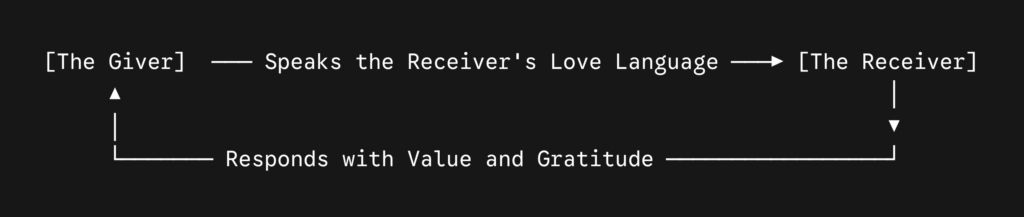
When the giver intentionally speaks the recipient’s language, and the recipient actively responds with verbal or physical gratitude, it creates a powerful loop of mutual appreciation. To build this habit early, our class highly recommends love language education during pre-marital or early relationship counseling to establish an unshakeable foundation before communication habits stiffen.
What’s Ahead: Join Our 7-Week Journey
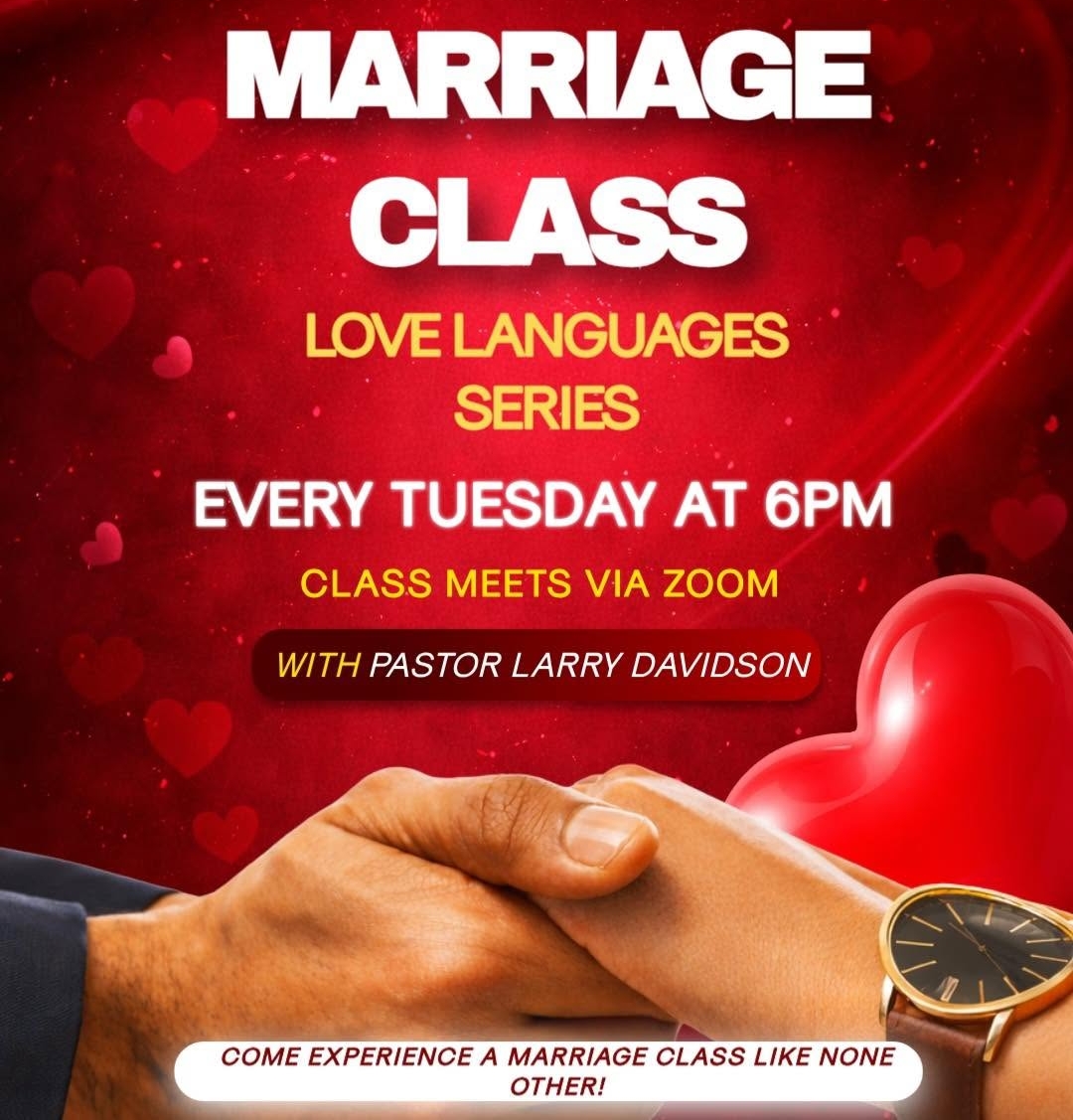
Our exploration of love languages is designed as a seven-week course to allow plenty of time for deep discussion, real-life storytelling, and practical application.
Because the class is hosted virtually, it is incredibly inclusive. We warmly welcome married couples, engaged pairs, and singles who want to understand themselves better. We are actively expanding our community and encourage you to invite friends and family—including our extended community members joining us from Indianapolis!
📝 Your Next Steps & Homework
To keep our momentum moving forward, we have a few vital reminders for the week ahead:
- Take the Test: All participants are required to complete the official Love Languages test before next Tuesday’s session so we can use the results for our group discussion. [view test]
- A Note for Leadership: Organizers are currently sending out direct test links to ensure everyone is equipped.
- Resource Materials: Keep an eye out for printed and digital guides on how to practically speak a spouse’s love language, which will be distributed before the next class.
Let’s commit to moving past the confusion, bridging the appreciation gaps, and building unified, Christ-centered homes. See you online next Tuesday!